A day hike is just a walk with a little more planning. That’s the whole secret. You don’t need fancy gear, a training plan, or years of experience. You need a comfortable pair of shoes, some water, and the sense to turn around before you’re exhausted. I’ve taken plenty of first-timers out on easy trails, and the ones who have a good time are almost always the ones who did four or five small things right. So here they are, in the order you’ll actually need them.
Before You Go
Most bad first hikes are decided before anyone leaves the house. Get these items sorted and the rest of the day takes care of itself.
- Pick a trail that’s shorter than you think you need. If you can walk three miles around your neighbourhood without suffering, choose a four-mile trail. Beginners consistently overestimate what their legs will do on uneven ground. A flat two-mile loop with a view is a better first hike than a six-mile climb that leaves you limping for three days.
- Check the weather the morning of, not the week before. Look at the hourly forecast for the trailhead area, not your home town. Hills make their own weather. If rain is likely, either pick a different day or accept that you’ll get wet and dress for it. Wind is the thing people forget; a ridge can be ten degrees colder than the car park.
- Tell someone where you’re going and when you’ll be back. A text to a friend is enough. “Walking the loop at [trail name], back by six, will message when I’m at the car.” This is the single most useful safety habit in hiking and it costs nothing.
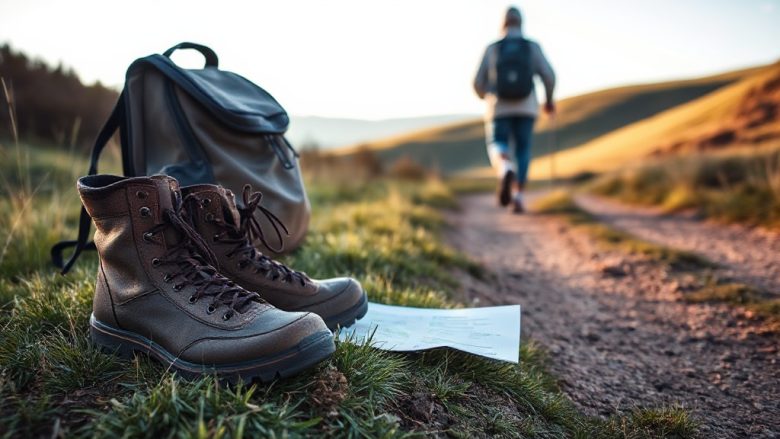
- Wear shoes you’ve already broken in. You don’t need hiking boots for a gentle day hike. Trainers with decent grip are fine on most well-maintained paths. What you must not do is wear brand new shoes, or flip-flops, or anything you haven’t walked a few miles in before. Blisters end more hikes than weather does.
- Dress in layers you can remove. A breathable base layer, a light fleece or jumper, and a thin waterproof shell will handle almost anything a day hike throws at you. Avoid cotton next to your skin if you can; it holds sweat and gets cold. Synthetic or merino works better, but honestly, a normal t-shirt is fine for a short low-level walk.
- Pack the small stuff. Water is the big one: roughly half a litre per hour of walking for an average adult, more in heat. Add a snack or two with some salt and sugar in it, a charged phone, a small first aid kit with blister plasters, a head torch or phone torch, and a paper map or downloaded offline map if the trail isn’t obvious. A lightweight rain jacket lives in your bag permanently from now on.
- Eat a proper breakfast. Not a coffee and a cereal bar in the car. Something with protein and slow carbs. You’ll feel the difference on the first climb.
- Charge your phone and download the route. Signal disappears in valleys and forests more often than people expect. Save the map offline before you lose bars, not after.
That’s it. If you’ve done those eight things, you’re better prepared than most people you’ll pass on the trail.
On the Trail
The trail itself is the easy part. These habits keep it that way.
- Start earlier than feels necessary. An eight or nine o’clock start gives you daylight to spare, cooler temperatures, and quieter paths. Late starts are how easy hikes turn into rushed ones.
- Walk at conversation pace. If you can’t talk while you climb, slow down. This isn’t a race and there’s no prize for finishing fast. Take a break every hour, even a two-minute one, before you feel like you need it.
- Drink before you’re thirsty. Sip regularly rather than gulping a litre at once. If your wee is dark at the end of the day, you didn’t drink enough. If you’re getting a headache, same answer.
- Eat little and often. A handful of nuts, a bit of fruit, half a sandwich. Nibbling through the day beats a big lunch that makes you sluggish.
- Watch your feet on descents. Most beginner falls happen going downhill, not up, because people relax and pick up speed on loose ground. Shorten your steps, keep your weight back, and look a few metres ahead rather than straight down.
- Stay on the marked path. Shortcuts damage the ground and are how people get lost. If you’re unsure which way to go, stop and check the map rather than guessing. Turning back is always an option and never a failure.
- Turn around on time, not on feeling. Decide your turnaround point before you start, whether that’s a time or a landmark. Most people feel fine at the halfway point and terrible two hours later. The walk back takes roughly as long as the walk out, sometimes longer when you’re tired.
- Be friendly but brief with other walkers. A nod, a hello, a quick chat about the view. If someone seems to need help, ask. If you need help, ask. Hikers are a helpful bunch.
- Leave nothing behind. Take your banana skins, wrappers and plasters home with you. They don’t decompose as fast as people think and they’re not meant to be there. Stick to the path, don’t pick the flowers, don’t chase the wildlife.
- Notice things. Stop at the viewpoint. Listen to the birds. Take a photo of the weird tree. The point of a day hike isn’t the distance covered, it’s the hour you spent not thinking about your inbox.
After the Hike
The bit nobody writes about, and the bit that determines whether you’ll want to do it again next weekend.
- Message the person you told. One line: “Back safe, great day.” It takes ten seconds and it’s the deal you made.
- Change out of damp clothes quickly. Sitting around in a sweaty shirt is how you get cold and stiff. Keep a dry top and a spare pair of socks in the car if you can.
- Drink water and eat something within the hour. Your body will thank you tomorrow.
- Stretch gently, don’t punish yourself. A few minutes of calves, hamstrings and hips is plenty. You don’t need a full routine. A slow walk around the block the next day helps more than aggressive stretching.
- Check your feet. Deal with hot spots and blisters now, not when they’ve become a problem. A plaster on a red patch today saves you a week of limping.
- Clean and dry your kit. Empty your bag, wipe out the crumbs, hang the waterproof up to dry properly. Gear that gets put away wet gets smelly and stops working.
- Note what you’d change next time. Too much food? Not enough water? Shoes rubbed? Write it down or just remember it. Every hike teaches you something about how you personally like to walk.
- Plan the next one while it’s fresh. Pick a slightly longer or slightly hillier trail for next weekend. Progress in hiking is gradual and that’s what makes it stick. Two miles becomes four, four becomes six, and before long you’re planning a full day out without thinking twice.
That’s the whole thing. A day hike is a walk with a little more planning, and now you’ve done the planning. Pick a short trail, check the forecast, tell a friend, fill a water bottle, and go. The first one is the hardest to start. After that, it’s just something you do on a Saturday.