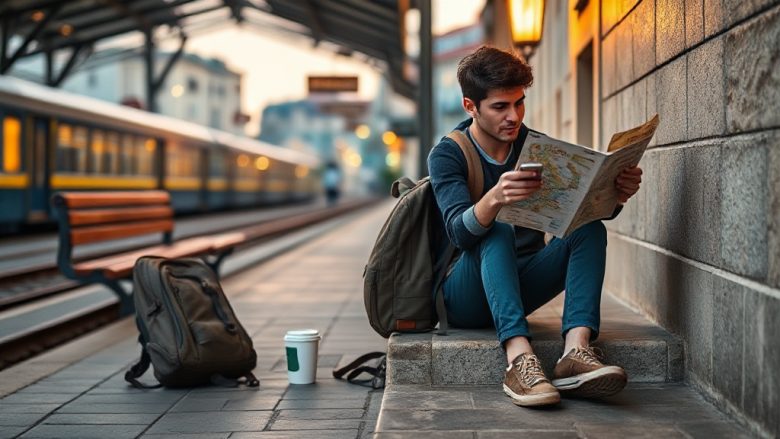
You know the moment. You’ve landed, cleared passport control, grabbed your bag, and reached for your phone to pull up the address of your guesthouse. No signal. No offline map. No screenshot. And the taxi driver is looking at you expectantly while you pretend to know where you’re going. One small oversight, and the whole first evening tilts sideways.
I’ve had that moment. More than once. The good news is that most solo travel disasters aren’t dramatic. They’re small, predictable, and entirely preventable. Below are the most frequent mistakes solo travelers make, why we keep making them, and the concrete fix for each. Scan the headings, find the one that sounds like you, and steal the fix before your next trip.
Mistake 1: Overplanning Every Hour
Why it happens: When you’re alone, the fear of empty time is real. A blank afternoon in a foreign city can feel like a failure before it even starts. So you build a spreadsheet with seventeen stops, three restaurants, and a sunset viewpoint, and you treat it like a contract.
I did this in Lisbon. By 2pm on day two I was exhausted, snapping at a pastry shop owner who didn’t deserve it, and skipping things I actually wanted to see because the schedule said otherwise. The itinerary had become a boss instead of a tool.
Do this instead: Pick one anchor per day. One thing you genuinely care about, whether that’s a museum, a hike, or a specific meal. Everything else is optional. Leave at least two unscheduled hours daily. That’s when the good stuff happens: the conversation with a local, the detour down a side street, the nap that saves your evening. A solo trip should have room to breathe, because you’re the only one who has to live with the plan.
Mistake 2: Not Booking the First Night Properly
Why it happens: You want flexibility. Booking only the first night feels like a commitment, and commitment feels like the opposite of adventure. So you land with nothing confirmed, telling yourself you’ll figure it out when you arrive.
That works when you’re twenty-two with endless energy and a working data plan. It works less well when you land at 11pm in a city where you don’t speak the language and every budget room within walking distance is full. I once spent two hours in a train station in northern Italy because I’d left my first night to chance. The fix is not to overbook. The fix is to lock down the first night and nothing else.
Do this instead: Book your first two nights before you leave home. Two nights gives you a base, a shower, and a chance to get your bearings without panic. After that, you’re free. You can extend, move on, or change your mind entirely. The first night is the one night where flexibility costs more than it’s worth.
Mistake 3: Carrying Too Much Stuff
Why it happens: Packing is anxiety management. Every extra item is a small promise that you’ll be ready for anything. The problem is that you’re the one carrying those promises up four flights of stairs in a building with no lift.
I’ve watched solo travelers haul 20kg backpacks through cobbled old towns, sweating through their shirts, unable to enjoy anything because their shoulders hurt. I’ve been that traveler. The bag becomes the trip.
Do this instead: Pack for four days, not for the length of your trip. Do laundry once a week. Choose one pair of shoes you can walk ten miles in and wear them on the plane. Bring half the toiletries you think you need and buy the rest there. If you’re unsure about an item, leave it. You can almost always buy a replacement, and you’ll rarely miss what you left behind. Lighter bags mean faster moves, cheaper transport, and a body that doesn’t hate you by day three.
Mistake 4: Treating Every Stranger as a Threat or a Best Friend
Why it happens: Solo travel scrambles your social instincts. One part of you wants to trust everyone because you’re lonely. Another part wants to trust no one because you’re vulnerable. Both extremes cause problems.
The over-trusting version gets talked into bad tours, overpriced drinks, and situations that are hard to leave. The over-suspicious version spends two weeks in silence, eats every meal alone, and comes home wondering why the trip felt flat.
Do this instead: Use a simple filter. Trust your gut on people, not your loneliness. If someone approaches you with a great deal on a tour or a room, slow down. Real opportunities don’t mind a day to think. If someone seems genuine, give them a chance. A shared meal with a stranger is often the best part of a solo trip. Just keep your valuables close, share your location with someone at home, and never let anyone rush you into a decision. You can be open and careful at the same time.
Mistake 5: Ignoring Your Own Energy and Health
Why it happens: Solo travel feels like a limited-time offer. You paid for the flight, you took the time off, and now you’re determined to squeeze every drop out of it. Rest feels like waste. So you skip meals, walk twelve miles a day, drink too much, and sleep five hours a night.
Then you get sick. Or you get so tired that everything looks the same. I once pushed through a fever in Vietnam because I didn’t want to miss a day, and I ended up missing three. The trip I was trying to save was the trip I ruined.
Do this instead: Schedule a slow day every four or five days. Sleep in. Eat a proper meal. Sit in a park and do nothing. Carry water and snacks so you’re never running on empty. Know where the nearest pharmacy is. If you feel something coming on, stop. A day of rest costs you one day. Ignoring it can cost you a week. Your energy is the engine of the whole trip. Treat it like the valuable thing it is.
Mistake 6: Forgetting the Practical Stuff Before You Go
Why it happens: The fun part of planning is picking destinations and daydreaming. The boring part is checking visa rules, card fees, and phone plans. So the boring part gets pushed to the last minute, or skipped entirely.
I’ve met travelers who discovered at the airport that their passport needed six months of validity. I’ve been the person whose bank froze their card on day one because I forgot to set a travel notice. These problems are dull to prevent and miserable to fix from abroad.
Do this instead: Spend one evening on the unglamorous checklist. Check your passport expiry and visa requirements for every country on your route. Tell your bank and card providers you’re traveling. Download offline maps for each city. Save your accommodation addresses and emergency contacts offline. Get a local SIM or eSIM sorted before you land if possible. Carry a small amount of local currency for the first day. None of this is exciting. All of it protects the exciting parts.
Here’s the quick pre-trip checklist I run through before every solo trip, and it takes about an hour:
- Passport valid for at least six months beyond your return date, plus any required visas.
- First two nights of accommodation booked and saved offline.
- Bank and credit cards flagged for travel, with a backup card stored separately.
- Offline maps downloaded, plus screenshots of addresses and key bookings.
- Phone plan or eSIM sorted, with a charger and adapter packed.
- One anchor activity planned per day, with two unscheduled hours left open.
- Bag packed to four days of clothing, with laundry planned along the way.
None of these mistakes are fatal. That’s the point. They’re small, common, and fixable. The travelers who have great solo trips aren’t braver or luckier than you. They’ve just learned where the traps are and stepped around them. You can do the same. Pick the mistake that sounds most like you, apply the fix, and go. The trip you’ve been imagining is closer than you think.